from functools import reduce

data = [{"a": 1}, {"a": 1}, {"a": 3}, {"b": 4}]
result = []
def unduplicate(result, data):
    if data not in result:
        result = result + [data]
    return result

for i in data:
    result = unduplicate(result, i)

>>> result
>>> [{'a': 1}, {'a': 3}, {'b': 4}]
稍显复杂,如果使用reduce函数和lambda函数,代码能简化很多:
def delete_duplicate(data):
    func = lambda x, y: x + [y] if y not in x else x
    data = reduce(func, [[], ] + data)
    return data

>>> delete_duplicate(data)
>>> [{'a': 1}, {'a': 3}, {'b': 4}]
当然, 我也能一行写完这个功能:
data = reduce(lambda x, y: x + [y] if y not in x else x, [[], ] + data)
只不过有可能会被打死在工位上,所以不建议这么干。
2.奇怪的技巧
就如文章开头提到的,字典之所以不能用set去重,是因为它是可变对象。
但是…如果我们把它变成不可变对象呢?
data = [{"a": 1}, {"a": 1}, {"a": 3}, {"b": 4}]
def delete_duplicate(data):
    immutable_dict = set([str(item) for item in data])
    data = [eval(i) for i in immutable_dict]
    return data
>>> delete_duplicate(data)
>>> [{'a': 1}, {'a': 3}, {'b': 4}]
没错,这能成。
1.遍历字典,将每个子项变成字符串存放到数组中,再通过set函数去重。
2.通过eval函数,将去重后的数组里的每个子项重新转化回字典。
如此Python,怎能不好玩?
3.高效的方式
上面讲了两种骚操作,其实都不太建议在实际工作中使用。
一个原因是真的太骚了,怕被打趴在工位上。
另一个原因是,它们在应对较大数据量的时候,性能不太行。
下面是最正统的方式:
data = [dict(t) for t in set([tuple(d.items()) for d in data])]
>>>data
>>>[{'a': 1}, {'b': 2}]
data2 = [{"a": {"b": "c"}}, {"a": {"b": "c"}}]
def delete_duplicate_str(data):
    immutable_dict = set([str(item) for item in data])
    data = [eval(i) for i in immutable_dict]
    return data
print(delete_duplicate_str(data2))

>>> [{'a': {'b': 'c'}}]
from selenium.webdriver.common.by import By
from selenium.webdriver.support import expected_conditions as EC
from selenium.webdriver.support.ui import WebDriverWait

# 显示等待打开主页面
wait = WebDriverWait(driver, 10, 0.5)

# 切换到对应的iframe,否则无法操作内部元素
wait.until(
    EC.frame_to_be_available_and_switch_to_it(driver.find_element_by_xpath('//iframe[contains(@id,"x-URS-iframe")]')))
# 找一个登录成功的页面元素
# 通过元素属性+元素值来唯一定位元素
result = True
try:
    element_recy_email = wait.until(EC.element_to_be_clickable((By.XPATH, '//span[@class="oz0" and contains(text(),"收 信")]')))
    if element_recy_email:
        result = True
    else:
        result = False
except Exception as e:
    result = False

print("邮箱登陆成功" if result else "邮箱登录失败")
while True:
    location = ISS_Info.iss_current_loc()
    lat = location['iss_position']['latitude']
    lon = location['iss_position']['longitude']
    print("Position: \n latitude: {}, longitude: {}".format(lat,lon))
    pos = iss.pos()
    posx = iss.xcor()
    if iss.xcor() >= (179.1):           ### Stop drawing at the right edge of
        iss.penup()                     ### the screen to avoid a
        iss.goto(float(lon),float(lat)) ### horizontal wrap round line
        time.sleep(5)
    else:
      iss.goto(float(lon),float(lat))
      iss.pendown()
      time.sleep(5)
我们还可以标出自己目前所处的位置,以查看和国际空间站的距离及空间站经过你上空的时间点(UTC)。
# 深圳
lat = 112.5118928
lon = 23.8534489

prediction = turtle.Turtle()
prediction.penup()
prediction.color('yellow')
prediction.goto(lat, lon)
prediction.dot(5)
prediction.hideturtle()

url = 'http://api.open-notify.org/iss-pass.json?lat=' +str(lat-90) + '&lon=' + str(lon)
response = urllib.request.urlopen(url)
result = json.loads(response.read())

over = result ['response'][1]['risetime']

prediction.write(time.ctime(over), font=style)
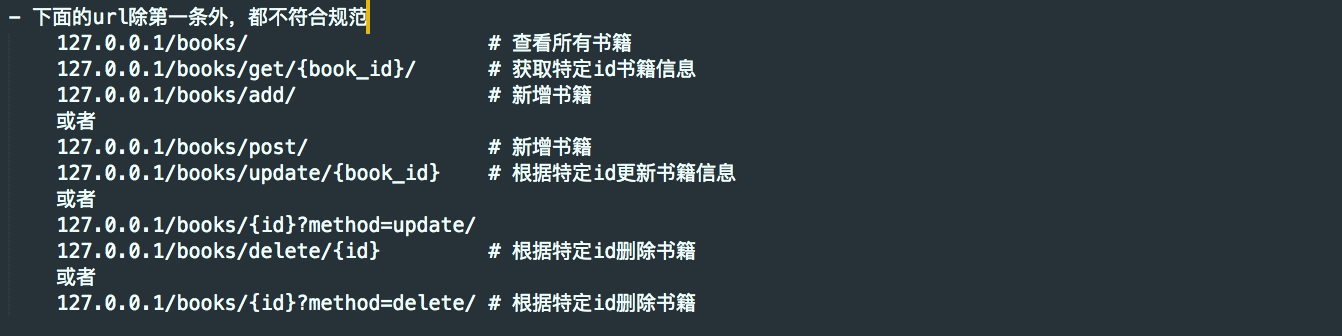
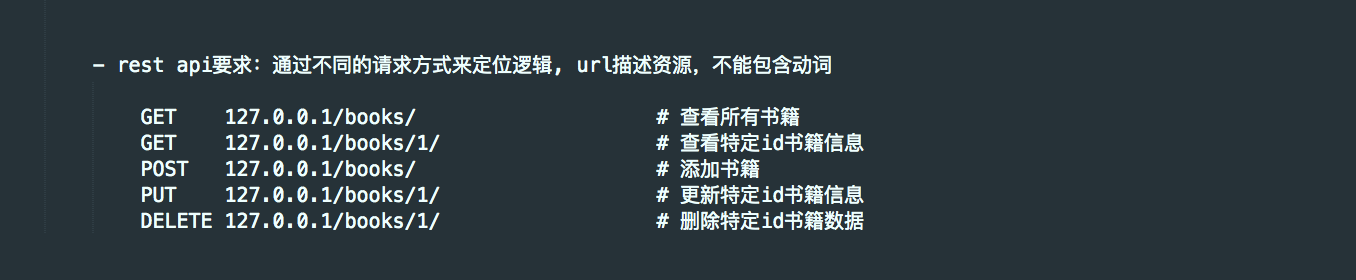
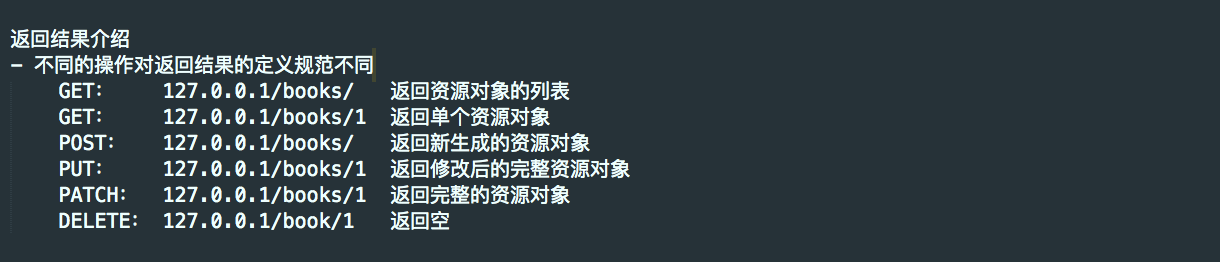
因此http协议创始人警告我们这些凡人们正在错误的使用http协议,除了警告,他还发表了一篇博客,大概意思就是教大家如何正确使用http协议,如何正确定义url,这就是REST(Representational State Transfer),不需要管这几个英文单词代表什么意思,只需要记住下面一句话:
用url唯一定位资源,用Http请求方式(GET, POST, DELETE, PUT)描述用户行为
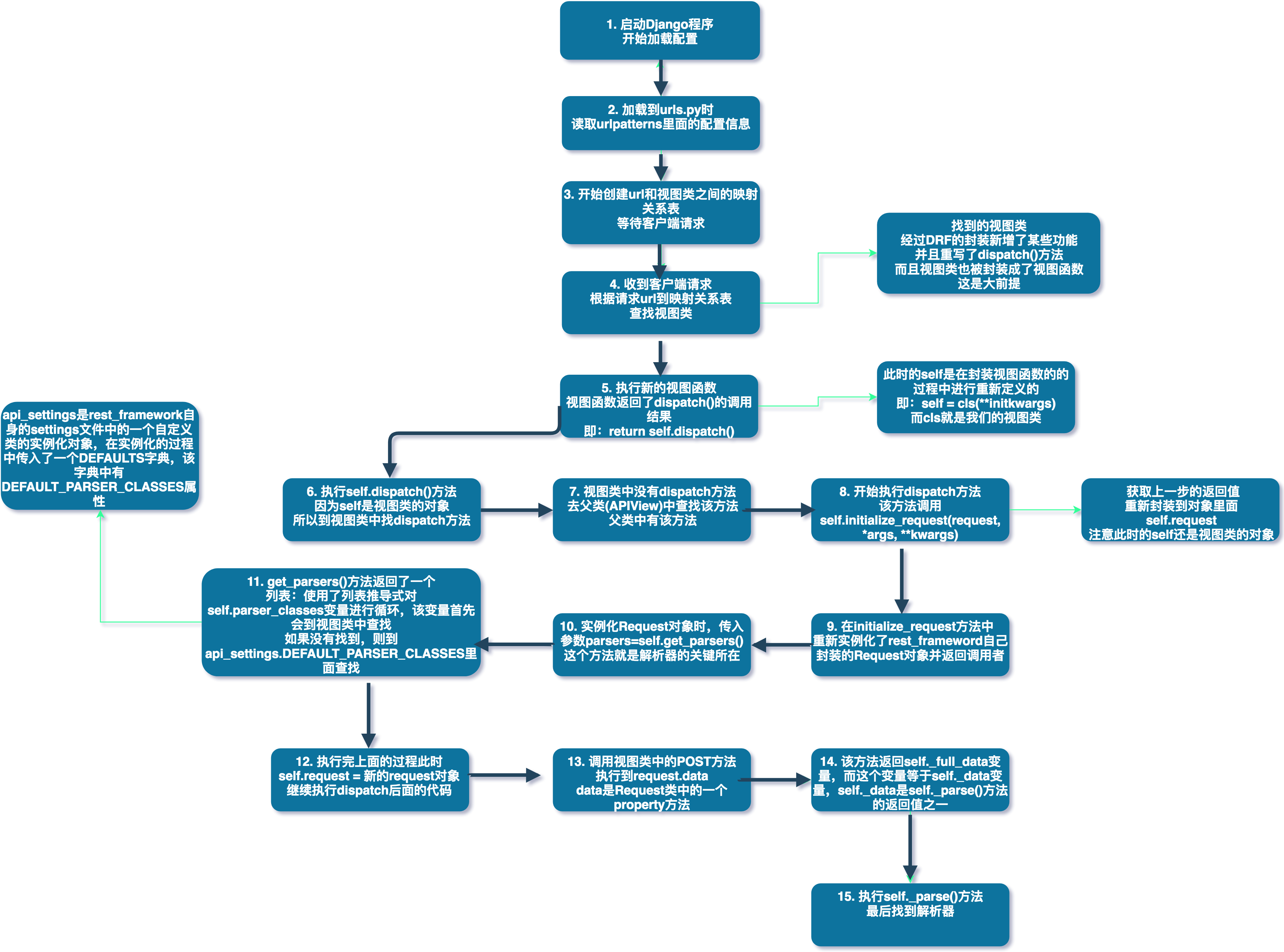
按照之前的方式,我们使用request.POST, 如果打印该值,会发现是一个空对象:request post <QueryDict: {}>,该现象证明Django并不能处理请求协议为application/json编码协议的数据,我们可以去看看request源码,可以看到下面这一段:
if self.content_type == 'multipart/form-data':
    if hasattr(self, '_body'):
        # Use already read data
        data = BytesIO(self._body)
    else:
        data = self
    try:
        self._post, self._files = self.parse_file_upload(self.META, data)
    except MultiPartParserError:
        # An error occurred while parsing POST data. Since when
        # formatting the error the request handler might access
        # self.POST, set self._post and self._file to prevent
        # attempts to parse POST data again.
        # Mark that an error occurred. This allows self.__repr__ to
        # be explicit about it instead of simply representing an
        # empty POST
        self._mark_post_parse_error()
        raise
elif self.content_type == 'application/x-www-form-urlencoded':
    self._post, self._files = QueryDict(self.body, encoding=self._encoding), MultiValueDict()
else:
    self._post, self._files = QueryDict(encoding=self._encoding), MultiValueDict()
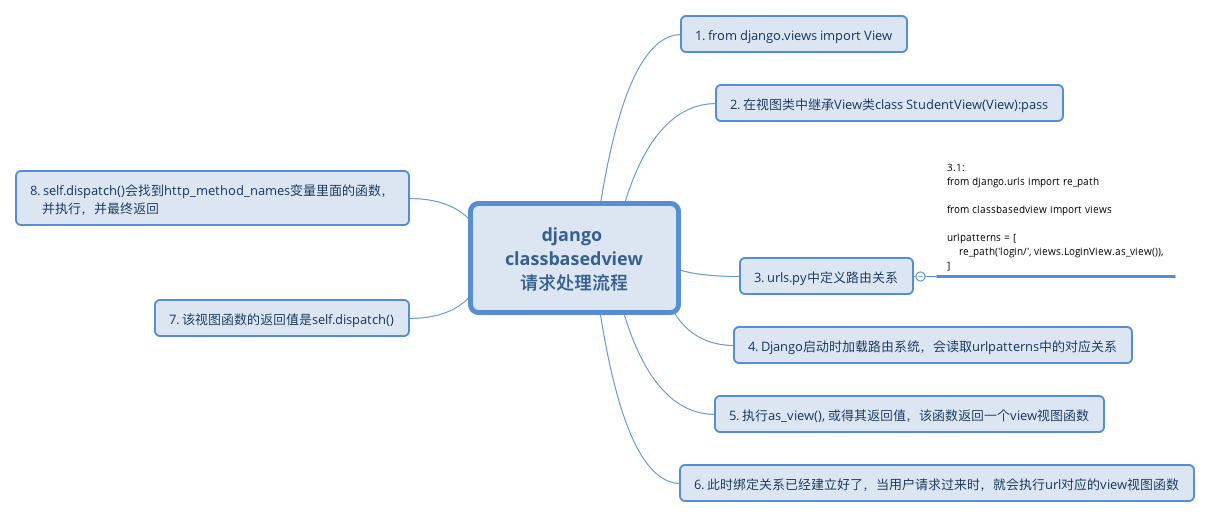
@classonlymethod
def as_view(cls, **initkwargs):
    """Main entry point for a request-response process."""
    for key in initkwargs:
        if key in cls.http_method_names:
            raise TypeError("You tried to pass in the %s method name as a "
                            "keyword argument to %s(). Don't do that."
                            % (key, cls.__name__))
            if not hasattr(cls, key):
                raise TypeError("%s() received an invalid keyword %r. as_view "
                                "only accepts arguments that are already "
                                "attributes of the class." % (cls.__name__, key))

def view(request, *args, **kwargs):
    self = cls(**initkwargs)
    if hasattr(self, 'get') and not hasattr(self, 'head'):
        self.head = self.get
        self.request = request
        self.args = args
        self.kwargs = kwargs
        return self.dispatch(request, *args, **kwargs)
    view.view_class = cls
    view.view_initkwargs = initkwargs

    # take name and docstring from class
    update_wrapper(view, cls, updated=())

    # and possible attributes set by decorators
    # like csrf_exempt from dispatch
    update_wrapper(view, cls.dispatch, assigned=())
    return view
@classonlymethod
def as_view(cls, **initkwargs):
    """Main entry point for a request-response process."""
    for key in initkwargs:
        if key in cls.http_method_names:
            raise TypeError("You tried to pass in the %s method name as a "
                            "keyword argument to %s(). Don't do that."
                            % (key, cls.__name__))
            if not hasattr(cls, key):
                raise TypeError("%s() received an invalid keyword %r. as_view "
                                "only accepts arguments that are already "
                                "attributes of the class." % (cls.__name__, key))

def view(request, *args, **kwargs):
    if request.content_type == "application/json":
        import json
        return HttpResponse(json.dumps({"error": "Unsupport content type!"}))

    self = cls(**initkwargs)
    if hasattr(self, 'get') and not hasattr(self, 'head'):
        self.head = self.get
        self.request = request
        self.args = args
        self.kwargs = kwargs
        return self.dispatch(request, *args, **kwargs)
    view.view_class = cls
    view.view_initkwargs = initkwargs

    # take name and docstring from class
    update_wrapper(view, cls, updated=())

    # and possible attributes set by decorators
    # like csrf_exempt from dispatch
    update_wrapper(view, cls.dispatch, assigned=())
    return view
from __future__ import absolute_import, unicode_literals
from NBAsite.celery import app
from celery import shared_task
import time

@shared_task
def waste_time():
    time.sleep(3)
    return "Run function 'waste_time' finished."